


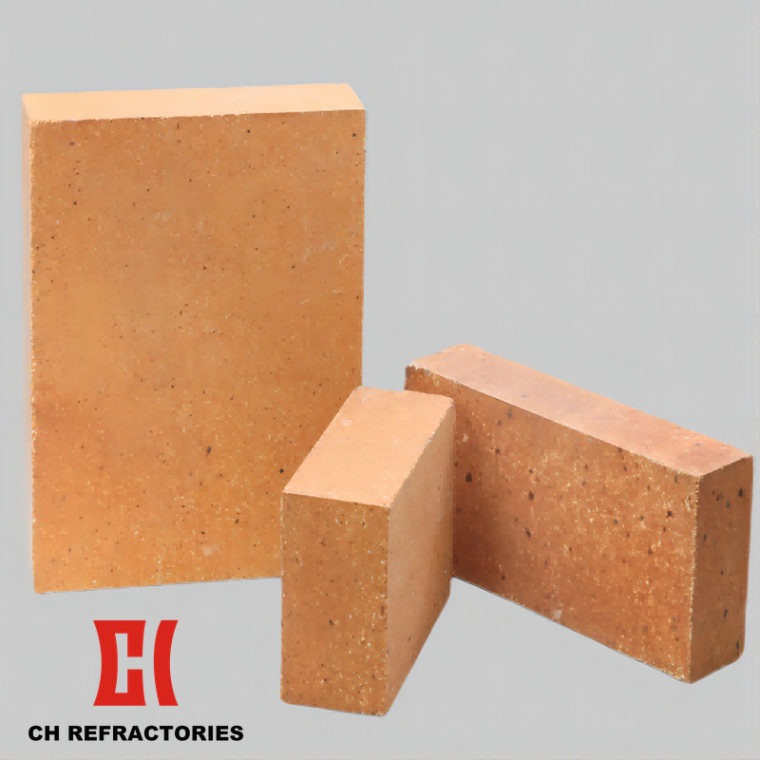
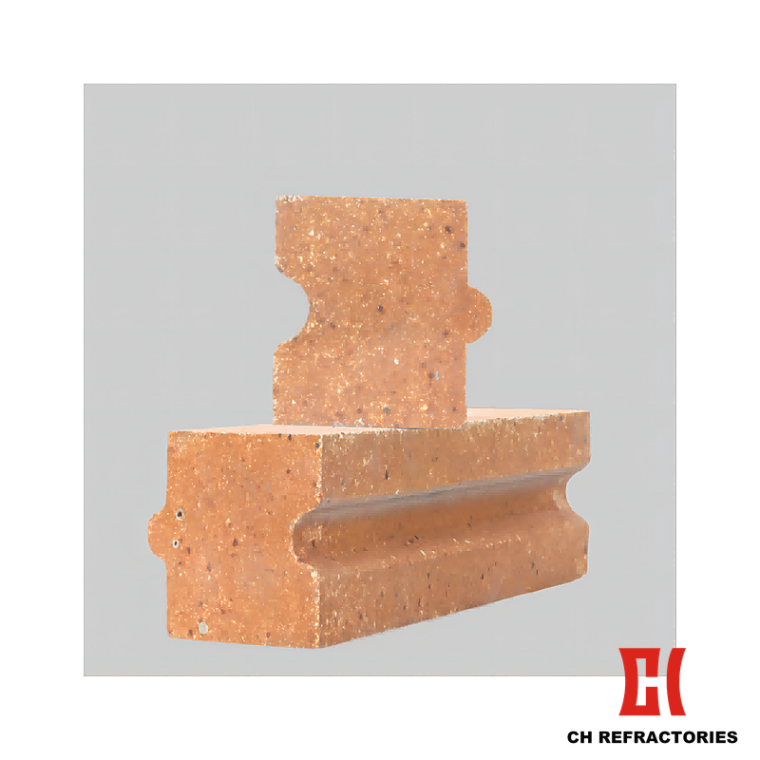
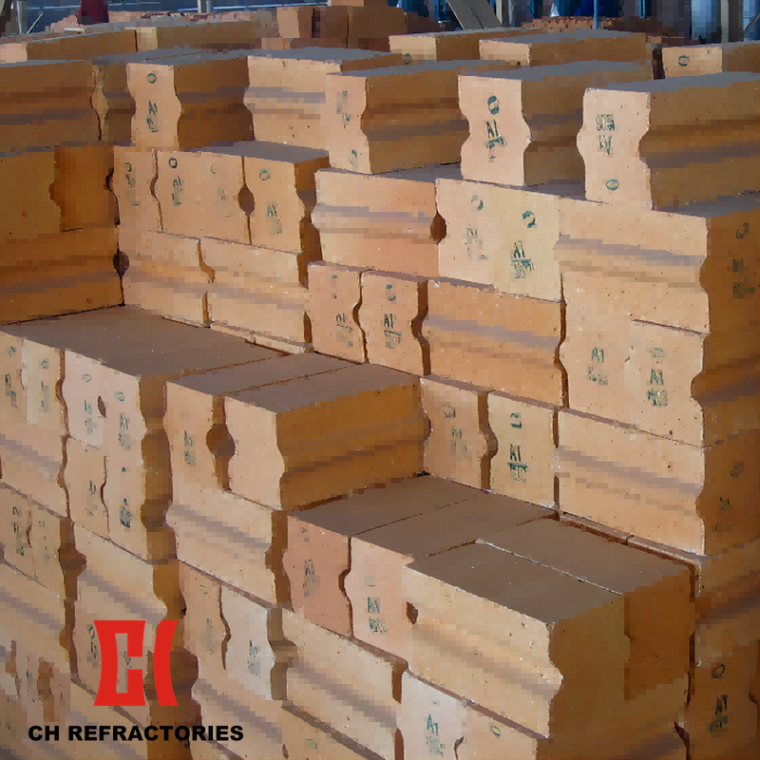
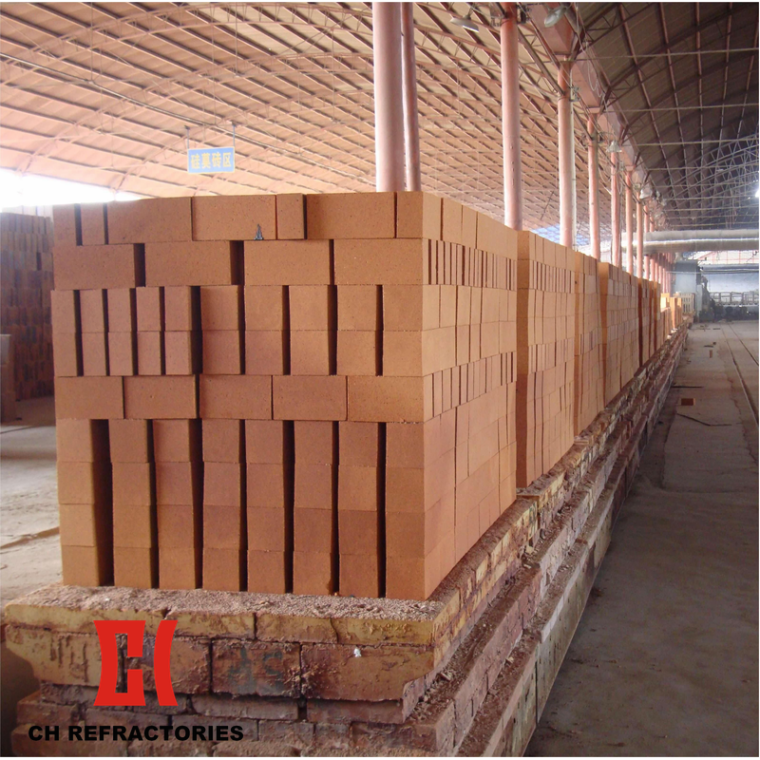
Fire clay brick
Application Industry: Common Refractory Materials
Application Equipment: Industrial Furnaces, Kiln Lining, Smelting Furnace, and Boiler Insulation
Size: Custom fire clay brick geometry per industrial furnace design (free engineering on request)
Products Overview
Our Fire clay brick is a high-performance refractory product engineered for industrial furnaces, kiln lining, smelting furnace, and boiler insulation service. The mineral composition of clay bricks is mainly kaolinite (Al2O3·2SiO2·2H2O) and 6-7 percent impurities (oxides of potassium, sodium, calcium, titanium and iron). The firing process of clay bricks is mainly due to the continuous dehydration of kaolinite to form crystallization of mullite (3Al2O3·2SiO2). SiO2 and Al2O3 in the clay brick form a eutectic low-melting silicate with impurities during the firing process, surrounding the mullite crystal.
The Fire clay brick product family is offered in eight engineering-proven N chemistry grades. The N-1 grade features Refractoriness minimum 1750 °C for highest-demand industrial furnace service, with Load Softening Temperature minimum 1400 °C at 0.2 MPa, Permanent Linear Change plus or minus 0.1 to -0.4 percent after 1400 °C drying for 2 hours, Apparent Porosity maximum 22 percent, and Cold Crushing Strength minimum 30 MPa. The N-2a grade features Refractoriness minimum 1730 °C for high-demand industrial furnace service, with Load Softening Temperature minimum 1350 °C at 0.2 MPa, Permanent Linear Change plus or minus 0.1 to -0.5 percent after 1400 °C drying for 2 hours, Apparent Porosity maximum 24 percent, and Cold Crushing Strength minimum 25 MPa. The N-2b grade features Refractoriness minimum 1730 °C for high-demand industrial furnace service, with Permanent Linear Change plus or minus 0.2 to -0.5 percent after 1400 °C drying for 2 hours, Apparent Porosity maximum 26 percent, and Cold Crushing Strength minimum 20 MPa. The N-3a grade features Refractoriness minimum 1710 °C for general demand industrial furnace service, with Load Softening Temperature minimum 1320 °C at 0.2 MPa, Permanent Linear Change plus or minus 0.2 to -0.5 percent after 1350 °C drying for 2 hours, Apparent Porosity maximum 24 percent, and Cold Crushing Strength minimum 15 MPa. The N-3b grade features Refractoriness minimum 1710 °C for general demand industrial furnace service, with Permanent Linear Change plus or minus 0.2 to -0.5 percent after 1350 °C drying for 2 hours, Apparent Porosity maximum 24 percent, and Cold Crushing Strength minimum 15 MPa. The N-4 grade features Refractoriness minimum 1690 °C for general demand industrial furnace service, with Load Softening Temperature minimum 1300 °C at 0.2 MPa, Permanent Linear Change plus or minus 0.2 to -0.5 percent after 1350 °C drying for 2 hours, Apparent Porosity maximum 26 percent, and Cold Crushing Strength minimum 20 MPa. The N-5 grade features Refractoriness minimum 1670 °C for lower-demand industrial furnace service, with Permanent Linear Change plus or minus 0.2 to -0.5 percent after 1350 °C drying for 2 hours, Apparent Porosity maximum 28 percent, and Cold Crushing Strength minimum 15 MPa. The N-6 grade features Refractoriness minimum 1580 °C for lowest-demand industrial furnace service, and Cold Crushing Strength minimum 15 MPa.
Sourced from our Xinmi City, Zhengzhou, Henan, China facility, each Fire clay brick grade is engineered to ASTM, GB/T, and ISO refractory standards. For an overview of the broader catalogue, see the Common Refractory Materials category, or contact our technical sales team for a free consultation against your refractory drawing.
Product Features
Features:
- Manufactured by Zhengzhou caihua with kaolinite (Al2O3·2SiO2·2H2O) and 6-7 percent impurities (oxides of potassium, sodium, calcium, titanium, and iron) as main raw materials
- Engineering-proven firing process is mainly due to the continuous dehydration of kaolinite to form crystallization of mullite (3Al2O3·2SiO2)
- Eight N-1 through N-6 chemistry grades covering Refractoriness 1580-1750 °C for matching different industrial furnace and kiln lining service requirements
- Weakly acidic refractory product resistant to attack by acidic slag and acidic gases, less resistant to alkaline substances, with good thermal properties and resistant to rapid cooling
- Clinker cover/working lining application with Cold Crushing Strength minimum 15-30 MPa and Apparent Porosity maximum 22-28 percent depending on grade for industrial furnace service
Product Specification
Fire clay brick
The mineral composition of clay bricks is mainly kaolinite (Al2O3 · 2SiO2 · 2H2O) and 6%~7% impurities (oxides of potassium, sodium, calcium, titanium and iron). The firing process of clay bricks is mainly due to the continuous dehydration of kaolinite to form crystallization of mullite (3Al2O3 · 2SiO2). SiO2 and Al2O3 in the clay brick form a eutectic low-melting silicate with impurities during the firing process, surrounding the mullite crystal.
Clay bricks are weakly acidic refractory products that are resistant to attack by acidic slag and acid gases and are less resistant to alkaline substances. Clay bricks have good thermal properties and are resistant to rapid cooling.
| Brands / Items | N-1 | N-2a | N-2b | N-3a | N-3b | N-4 | N-5 | N-6 | |
|---|---|---|---|---|---|---|---|---|---|
| Refractoriness (°C) ≥ | 1750 | 1730 | 1730 | 1710 | 1710 | 1690 | 1670 | 1580 | |
| 0.2MPa load softening temperature (°C) ≥ | 1400 | 1350 | – | 1320 | – | 1300 | – | – | |
| Reheating linear change (%) | 1400°C, 2h | +0.1~-0.4 | +0.1~-0.5 | +0.2~-0.5 | – | – | – | – | – |
| 1350°C, 2h | – | – | – | +0.2~-0.5 | +0.2~-0.5 | +0.2~-0.5 | +0.2~-0.5 | – | |
| Apparent porosity (%) ≤ | 22 | 24 | 26 | 24 | 26 | 24 | 26 | 28 | |
| Normal temperature compressive strength (MPa) ≥ | 30 | 25 | 20 | 15 | 15 | 20 | 15 | 15 | |
Note: Five performance parameters specified per source image: Refractoriness, 0.2MPa load softening temperature, Reheating linear change, Apparent porosity, and Normal temperature compressive strength. Eight N chemistry grades engineered for industrial furnace and kiln service. For project-specific chemistry and grade, contact CH Refractories engineering.
Product Applications
Fire clay brick is a high-performance refractory product engineered for industrial furnaces, kiln lining, smelting furnace, and boiler insulation service. The mineral composition of clay bricks is mainly kaolinite (Al2O3·2SiO2·2H2O) and 6-7 percent impurities (oxides of potassium, sodium, calcium, titanium and iron). The firing process of clay bricks is mainly due to the continuous dehydration of kaolinite to form crystallization of mullite (3Al2O3·2SiO2). Clay bricks are weakly acidic refractory products that are resistant to attack by acidic slag and acid gases and are less resistant to alkaline substances. The fire clay brick product family has good thermal properties and is resistant to rapid cooling, with stable quality and good engineering performance across the global common refractory materials value chain.
Application Industry: Common Refractory Materials.
Target Equipment: Industrial Furnaces, Kiln Lining, Smelting Furnace, and Boiler Insulation of small, medium-size, and large industrial operations across the global common refractory materials value chain.
Specific Application Zones: The N-1 grade (Refractoriness minimum 1750 °C) is the highest-demand variant engineered for industrial furnace service, with Load Softening Temperature minimum 1400 °C, Apparent Porosity maximum 22 percent, and Cold Crushing Strength minimum 30 MPa. The N-2a grade (Refractoriness minimum 1730 °C) is the high-demand variant engineered for industrial furnace service, with Load Softening Temperature minimum 1350 °C, Apparent Porosity maximum 24 percent, and Cold Crushing Strength minimum 25 MPa. The N-2b grade (Refractoriness minimum 1730 °C) is the high-demand variant engineered for industrial furnace service, with Apparent Porosity maximum 26 percent, and Cold Crushing Strength minimum 20 MPa. The N-3a grade (Refractoriness minimum 1710 °C) is the general demand variant engineered for industrial furnace service, with Load Softening Temperature minimum 1320 °C, Apparent Porosity maximum 24 percent, and Cold Crushing Strength minimum 15 MPa. The N-3b grade (Refractoriness minimum 1710 °C) is the general demand variant engineered for industrial furnace service, with Apparent Porosity maximum 24 percent, and Cold Crushing Strength minimum 15 MPa. The N-4 grade (Refractoriness minimum 1690 °C) is the general demand variant engineered for industrial furnace service, with Load Softening Temperature minimum 1300 °C, Apparent Porosity maximum 26 percent, and Cold Crushing Strength minimum 20 MPa. The N-5 grade (Refractoriness minimum 1670 °C) is the lower-demand variant engineered for industrial furnace service, with Apparent Porosity maximum 28 percent, and Cold Crushing Strength minimum 15 MPa. The N-6 grade (Refractoriness minimum 1580 °C) is the lowest-demand variant engineered for industrial furnace service, with Cold Crushing Strength minimum 15 MPa. All eight grades deliver good thermal properties and are resistant to rapid cooling for industrial furnace, kiln lining, smelting furnace, and boiler insulation service, with stable quality and good engineering performance across the global common refractory materials value chain.
CH Refractories is a Fire clay brick manufacturer in China, Henan, Zhengzhou. The complete Fire clay brick product family is manufactured in our Xinmi City, Zhengzhou, Henan, China facility to ASTM, GB/T, and ISO refractory standards. Each batch is supported by free consultation, on-site technical support, and a dedicated engineering team serving Common Refractory Materials customers across the global common refractory materials value chain.
Product FAQ
A1: Fire clay brick is a high-performance refractory product engineered for industrial furnaces, kiln lining, smelting furnace, and boiler insulation service. The mineral composition of clay bricks is mainly kaolinite (Al2O3·2SiO2·2H2O) and 6-7 percent impurities (oxides of potassium, sodium, calcium, titanium and iron). The firing process of clay bricks is mainly due to the continuous dehydration of kaolinite to form crystallization of mullite (3Al2O3·2SiO2). Clay bricks are weakly acidic refractory products that are resistant to attack by acidic slag and acid gases and are less resistant to alkaline substances. Clay bricks have good thermal properties and are resistant to rapid cooling.
A2: CH Refractories offers eight engineering-proven N chemistry grades of fire clay brick. The N-1 grade features Refractoriness minimum 1750 °C for highest-demand industrial furnace service. The N-2a grade features Refractoriness minimum 1730 °C for high-demand industrial furnace service. The N-2b grade features Refractoriness minimum 1730 °C for high-demand industrial furnace service. The N-3a grade features Refractoriness minimum 1710 °C for general demand industrial furnace service. The N-3b grade features Refractoriness minimum 1710 °C for general demand industrial furnace service. The N-4 grade features Refractoriness minimum 1690 °C for general demand industrial furnace service. The N-5 grade features Refractoriness minimum 1670 °C for lower-demand industrial furnace service. The N-6 grade features Refractoriness minimum 1580 °C for lowest-demand industrial furnace service. All eight grades are designed for industrial furnace, kiln lining, smelting furnace, and boiler insulation service with good thermal properties and resistant to rapid cooling.
A3: Fire clay brick delivers Refractoriness minimum 1580-1750 °C depending on grade. Load Softening Temperature is minimum 1300-1400 °C at 0.2 MPa depending on grade. Permanent Linear Change is plus or minus 0.1-0.5 percent after 1350-1400 °C drying for 2 hours depending on grade. Apparent Porosity is maximum 22-28 percent depending on grade. Cold Crushing Strength is minimum 15-30 MPa at normal temperature depending on grade. The fire clay brick product family is weakly acidic refractory product resistant to acidic slag and acid gases, with good thermal properties and resistant to rapid cooling for industrial furnace, kiln lining, smelting furnace, and boiler insulation service.
A4: Yes. CH Refractories offers custom chemistry, grade, and geometry optimization against the buyer's specific industrial furnace, kiln lining, smelting furnace, and boiler insulation design and operating conditions. CH Refractories engineers can adjust Al2O3 content, SiO2 content, raw material formulation, and firing process to meet specific industrial furnace service temperature and operating conditions. Please send the industrial furnace drawing, lining design, furnace capacity, and operating temperature data to our engineering team in Xinmi City, Zhengzhou, Henan, China for a free consultation, on-site technical support, and a tailored fire clay brick formulation proposal with optimized grade selection, raw material adjustment, and geometry design for your specific industrial furnace, kiln lining, smelting furnace, and boiler insulation service conditions.


